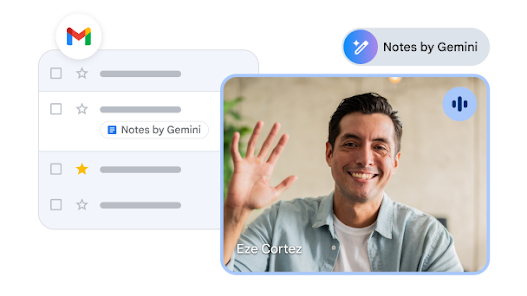
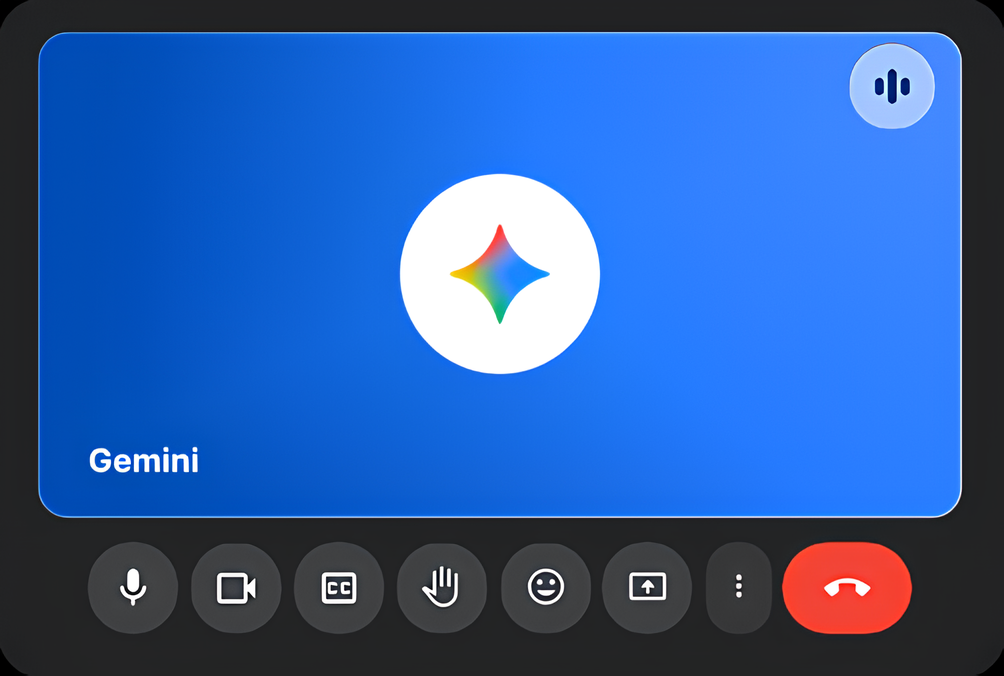
A strategic exploration of AI as an active collaborator, reimagining the meeting experience from passive observation to proactive partnership.
Today's AI in Google Meet operates silently in the background. It can transcribe your conversation and generate notes, but it can't speak up when you need it. It can't answer questions, provide context, or contribute to discussions.
This creates a missed opportunity: What if AI could be a true collaborator, someone (or something) you could invite, address directly, and rely on during meetings?
Transform Gemini from a passive observer into an active participant, one that joins when invited, speaks when addressed, and helps teams work smarter.
A zero-friction collaborative experience where AI reduces the cognitive load of meeting management by functioning with complete presence parity.
Lower technical overhead, but treated AI as a background task. Users often forgot it was even there until the end of the meeting.
Required deeper systems integration, but provided the psychological "presence" needed for active collaboration.
I initially explored a chat-based sidebar — it was lower friction but in concept testing, people kept forgetting Gemini was there. That single observation killed the sidebar idea.
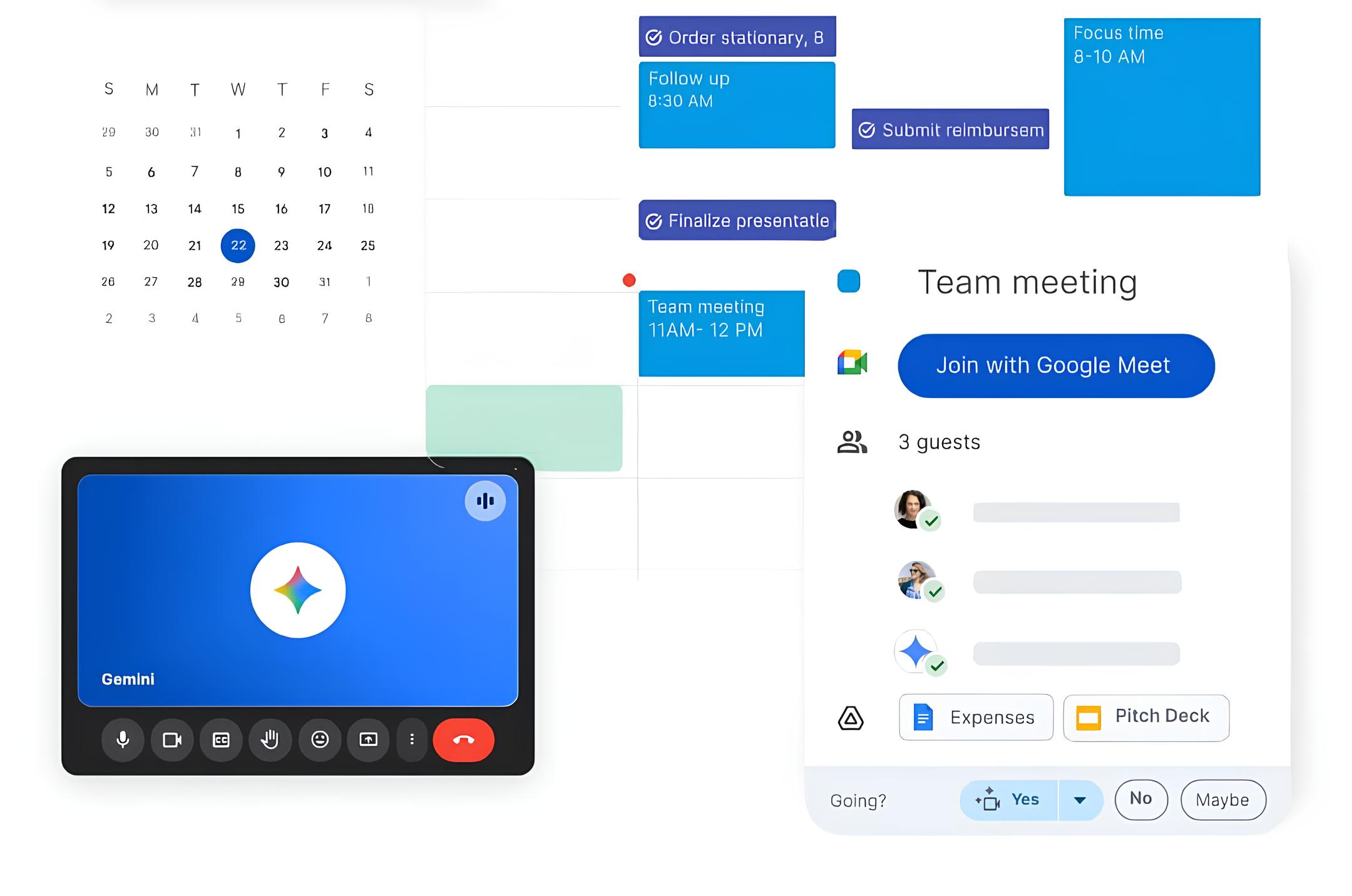
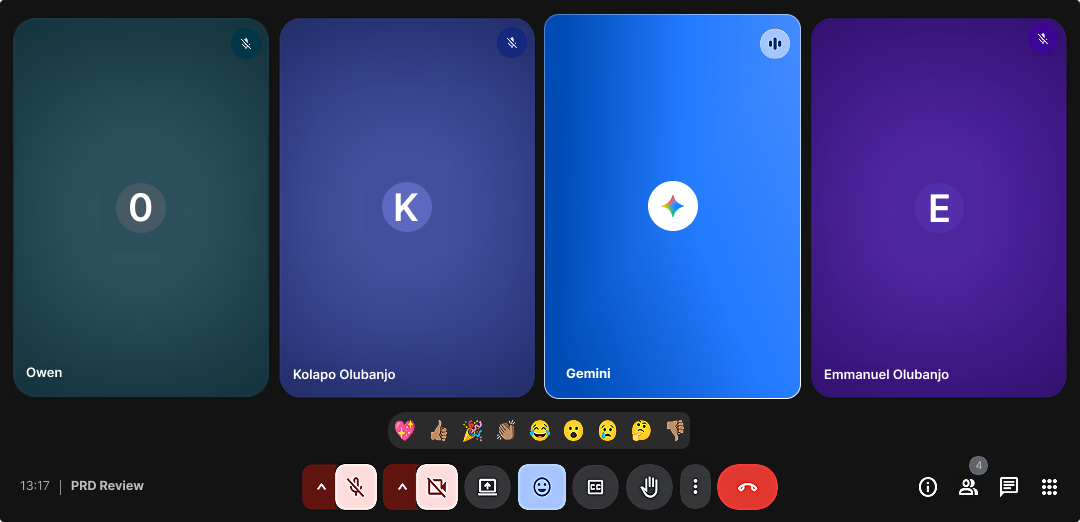
Imagine inviting Gemini to your Google Meet just like you would a colleague. Once admitted, Gemini appears with its own video tile and can contribute meaningfully to conversations.
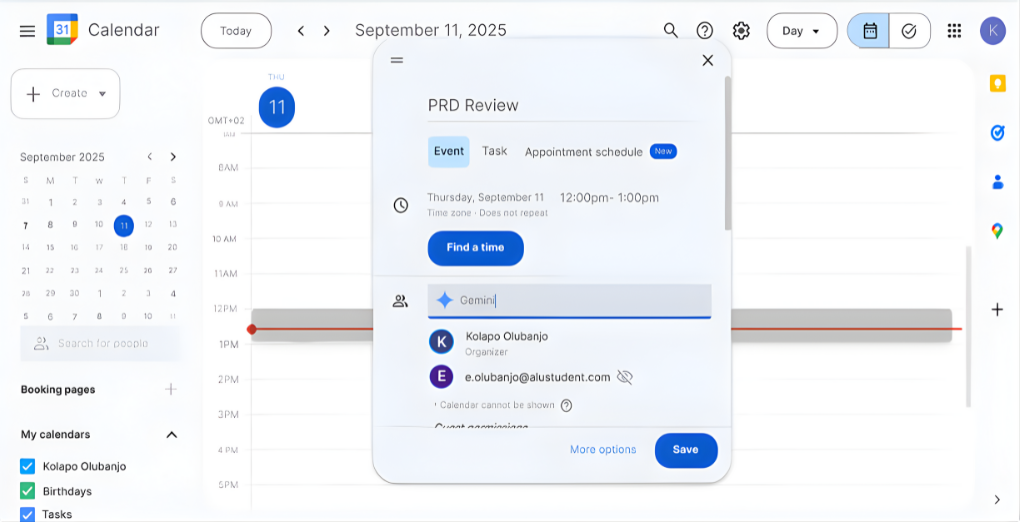
Add Gemini to any Calendar event. It joins from the waiting room, respecting consent and transparency.
Call on Gemini during the meeting to answer questions, provide data, or clarify complex topics in real-time.
Gemini can surface relevant documents, past decisions, or contextual information when the conversation needs it.
Automatically takes notes, identifies action items, and tracks key decisions without manual intervention.
After the meeting, Gemini distributes summaries to Google Docs, assigns tasks in Google Tasks, or shares to Slack.
Full transparency on what Gemini hears, records, and shares. Users maintain complete control.
After publishing this case study, I cold-messaged several Google design leaders — staff designers and heads of design — on LinkedIn. The response was unexpected. Multiple design leaders engaged positively. One specifically noted that this concept aligned with directions Google's teams were actively exploring internally, and that the approach demonstrated a level of strategic product thinking most designers don't show. Within a few months of publishing, Google shipped an iteration of Gemini inside Google Meet — currently functioning as an active note-taker with a visible in-meeting presence, moving in the direction this concept outlined.
When creating a Calendar event, simply add "gemini@google.com" as a guest. Gemini appears in your invite list just like any other participant.
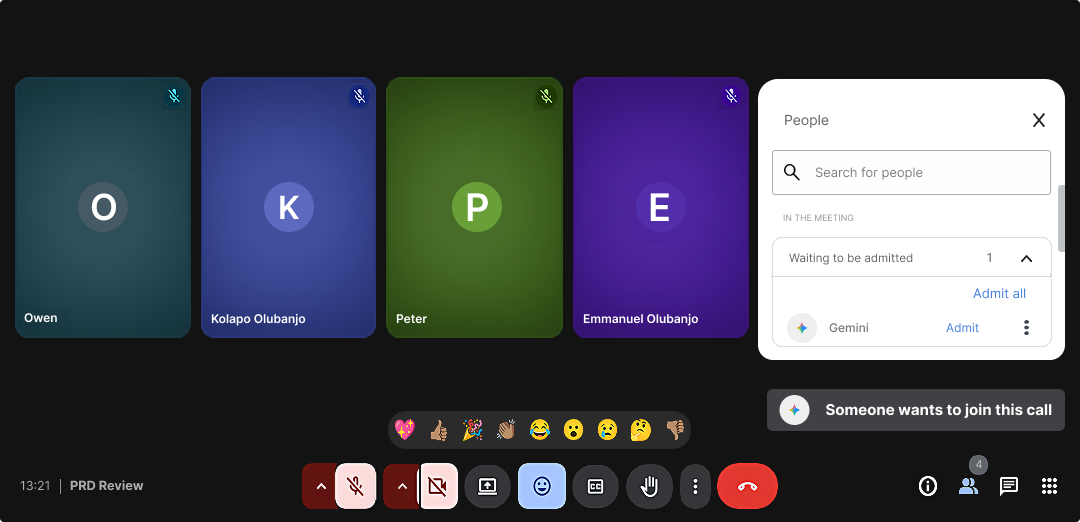
Gemini joins the waiting room like any external guest. The meeting host receives a clear notification and can admit Gemini with one tap.
Anyone can address Gemini directly: "Hi Gemini, what were the action items from last week?" Gemini responds via audio with relevant visuals.
After the meeting, Gemini generates a structured summary with notes, decisions, and assigned tasks shared to your workspace.
"AI in the enterprise should not just be a tool, but a transparent and active partner in the creative process."
Project Vision — Google Workspace
Explore how I reimagined digital organization with Notion or check out Okrika's thrift ecosystem.